
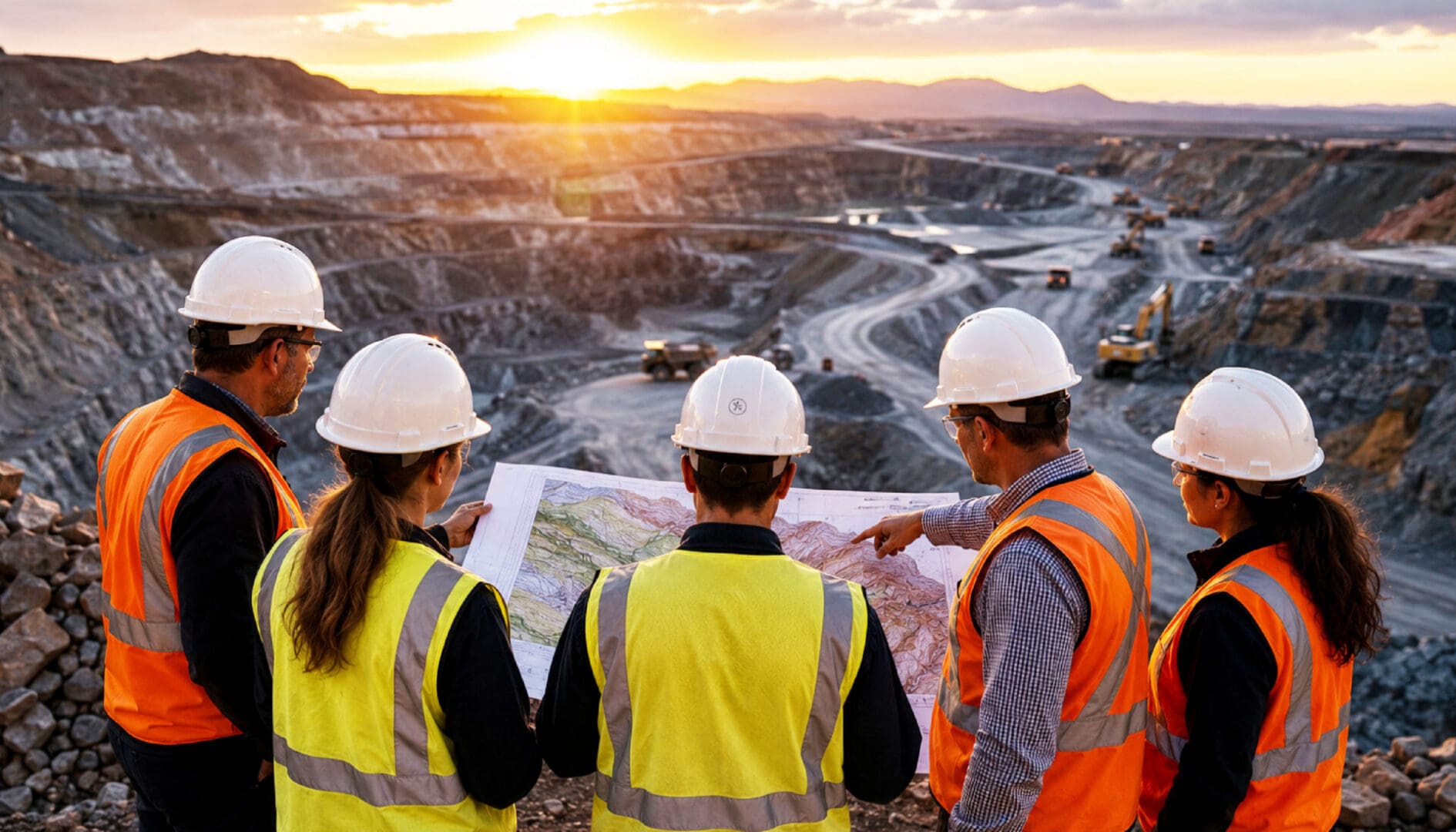
Recent discussions at the SME 11th Current Trends in Mining Finance Conference highlighted a recurring theme. While conversations ranged from capital markets and project financing to critical minerals and supply chains, one observation emerged consistently. Mining’s greatest challenges are no longer purely technical or purely financial. They increasingly exist at the intersection of disciplines that have traditionally operated independently.
Mining has never employed more highly skilled professionals than it does today. Geoscientists, engineers, metallurgists, environmental specialists, financiers, regulators and community leaders each contribute valuable expertise to increasingly complex projects. Individually, these disciplines continue to advance at an extraordinary pace. The next opportunity is ensuring that expertise is integrated effectively across organizations so that decisions reflect the full breadth of available knowledge.
Complexity Demands Integration
Modern mining projects are interconnected in ways that were less common even a generation ago. A geoscientific interpretation influences resource models, which shape engineering decisions, processing strategies and economic evaluations. Environmental studies influence mine planning, while community engagement affects permitting, infrastructure and development schedules. Decisions made within one discipline often influence outcomes across many others.
This is not a challenge unique to mining. It is a characteristic of every complex industry where technical, commercial and social considerations intersect. Organizations that consistently perform well encourage collaboration early in the project lifecycle, allowing different perspectives to strengthen decisions before projects become more difficult or more expensive to change. Integration is no longer simply good practice. It is becoming a competitive advantage.
Risk Looks Different from Every Perspective
Risk is one of the most frequently discussed topics in mining, yet every discipline defines it differently. A geoscientist may focus on geological uncertainty, while an engineer considers operational performance and an environmental specialist evaluates long-term stewardship. Investors often view the same project through the lens of capital allocation, commodity markets and financial returns. Each perspective is valid because each reflects a different responsibility.
The strongest organizations recognize that these perspectives complement one another rather than compete with one another. Bringing multiple viewpoints into the same discussion creates a more complete understanding of both opportunity and uncertainty. Decisions become more balanced because they consider technical, commercial, environmental and social factors together rather than in isolation. That approach reduces surprises and builds greater confidence throughout the life of a project.
Better Information Requires Better Communication
The mining industry continues to generate more information than ever before. Analytical methods continue to improve, modelling capabilities continue to evolve and artificial intelligence is becoming an increasingly valuable tool for interpreting complex datasets. These advances are expanding the industry’s understanding of mineral systems and improving the quality of technical information available for decision making.
Information alone, however, does not create value. Its value depends on how effectively it informs decisions about exploration, project development and capital allocation. Technical insights are most powerful when they are communicated in ways that support strategic planning, while commercial decisions are strongest when they are grounded in a clear understanding of technical opportunities and uncertainty. Technology will continue to transform mining, but collaboration will remain the foundation of effective decision making.
The Organizations That Think Together Will Lead
The mining industry is entering a period of significant change. Critical minerals, increasing technical complexity and evolving stakeholder expectations are reshaping how projects are evaluated and developed. Organizations that thrive will integrate geoscience, engineering, environmental stewardship, finance and strategy into a shared decision-making process. Technical excellence will always be essential, but it is no longer sufficient on its own.
Mining has always depended on knowledge. As projects become increasingly complex, competitive advantage will depend on how effectively that knowledge is shared across disciplines and translated into action. The organizations that think together will make better decisions, build stronger projects and create greater long-term value. Mining’s next breakthrough may not be technical. It may be organizational.
Helping Shape the Future of Mining
LKI Consulting believes that the future of mining will be defined not only by advances in geoscience and technology, but also by an industry’s ability to integrate expertise across disciplines. Through client work, education, university engagement and industry knowledge sharing, LKI Consulting supports informed decision making and meaningful collaboration across the mining sector. As projects become increasingly complex, stronger communication, broader perspectives and shared understanding will be just as important as technical excellence in building the next generation of successful mining projects.
