
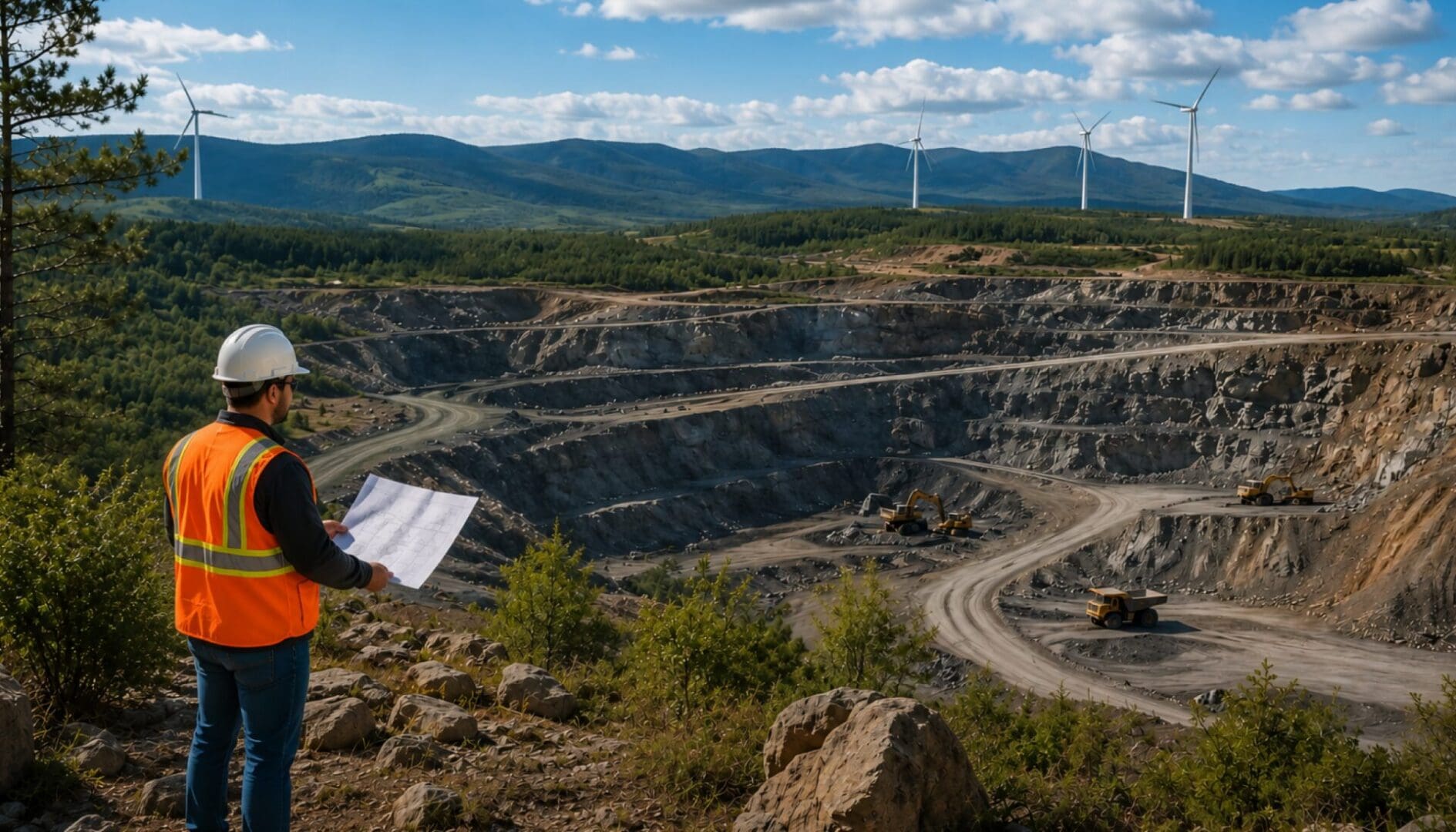
The transition to a lower carbon economy has placed mining at the center of global conversations. Governments, industry and investors increasingly recognize that critical minerals are essential for renewable energy, advanced manufacturing and modern technology. Yet despite this urgency, developing a new mine still commonly takes 20 to 30 years from discovery to production.
The explanation is more complex than permitting alone. Every mining project must balance technical evaluation, environmental stewardship, community engagement, regulatory review and commercial risk before construction can begin. Each step contributes to building projects that are technically sound, environmentally responsible and supported by the communities where they operate.
Mining is the foundation of the technologies driving the energy transition and modern economies. A lower carbon future will require more minerals, making responsible resource development increasingly important.
This presents one of the defining challenges of the energy transition. Society increasingly agrees that mining is essential. The opportunity is to ensure mineral resources can be developed responsibly while protecting the environment, respecting communities and creating lasting economic value. These objectives are not mutually exclusive. They are becoming shared priorities.
Modern mine development begins years before a shovel enters the ground. Geoscientists, engineers and environmental specialists work together to understand the resource, reduce technical uncertainty and establish environmental baseline conditions. Many mining companies also begin engaging local communities during exploration so that priorities, concerns and opportunities can help shape project planning from the outset.
Building trust takes time because it is earned through relationships rather than approvals. Governments, Indigenous communities, local residents, regulators and industry all bring valuable perspectives that strengthen projects. Early engagement helps identify opportunities, address concerns and build confidence long before construction begins.
The industry also faces another challenge. Mining remains largely invisible to the public despite underpinning modern society. Improving public understanding through education, outreach and open dialogue will be just as important as improving technology and project development. Building trust begins with helping people understand where the materials they rely upon actually come from.
Meaningful change often begins with small steps. Classroom visits, university lectures, community events and open conversations all contribute to a better understanding of mining and the role it plays in society. Many organizations across industry, academia and consulting are helping reshape that conversation because a stronger future for mining begins with education.
Perhaps the most important question is not whether society needs more mining. Increasingly, there is broad agreement that it does. The real question is how governments, industry, communities, regulators, geoscientists and educators can work together to responsibly shorten the journey from discovery to first production.
If society truly wants a lower carbon future powered by critical minerals, then solving the 30-year mine should become a shared objective. Success will not come from reducing environmental standards or limiting community voices. It will come from finding better ways for geoscience, engineering, environmental stewardship, community engagement and regulation to move forward together so that the mines society needs can also become the mines society supports.
Helping Shape the Future of Responsible Mining
LKI Consulting believes that responsible resource development extends beyond technical excellence. By helping clients reduce uncertainty through integrated geoscience while also supporting education through elementary school outreach, university lectures and industry knowledge sharing, LKI Consulting is committed to strengthening both mining projects and public understanding. Building the mines society needs will require more than better technology. It will require informed conversations, greater collaboration and a shared commitment to responsible resource development.
